Your projects under control: charter, schedule, cost, changes.
Generic tools paint pretty tasks; they don’t tell you whether the project is on time or on budget. The Operational cockpit applies real PMBOK discipline: a formal charter, critical path, earned value and change control — with hard metrics, not aesthetics.
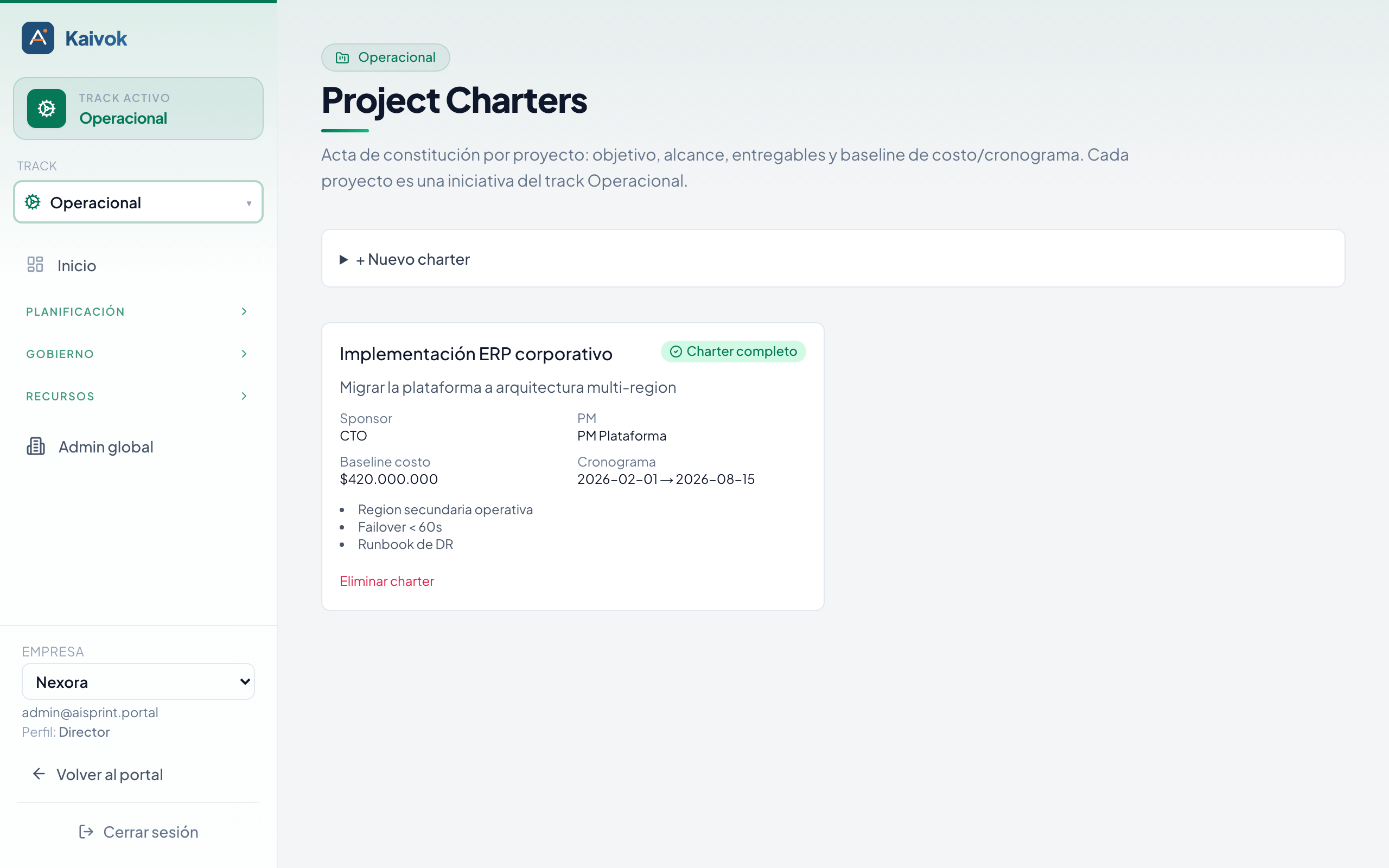
Every project starts with a formal charter, not a chat.
A PMBOK project charter: objective, scope, milestones, budget, stakeholders and risks. The project is born governed, with an explicit mandate and an assigned sponsor.
- 1Objective and business justification
- 2Scope, deliverables and exclusions
- 3Milestones and high-level schedule
- 4Budget and assumptions
- 5Stakeholders and sponsor
- 6Initial risks and constraints
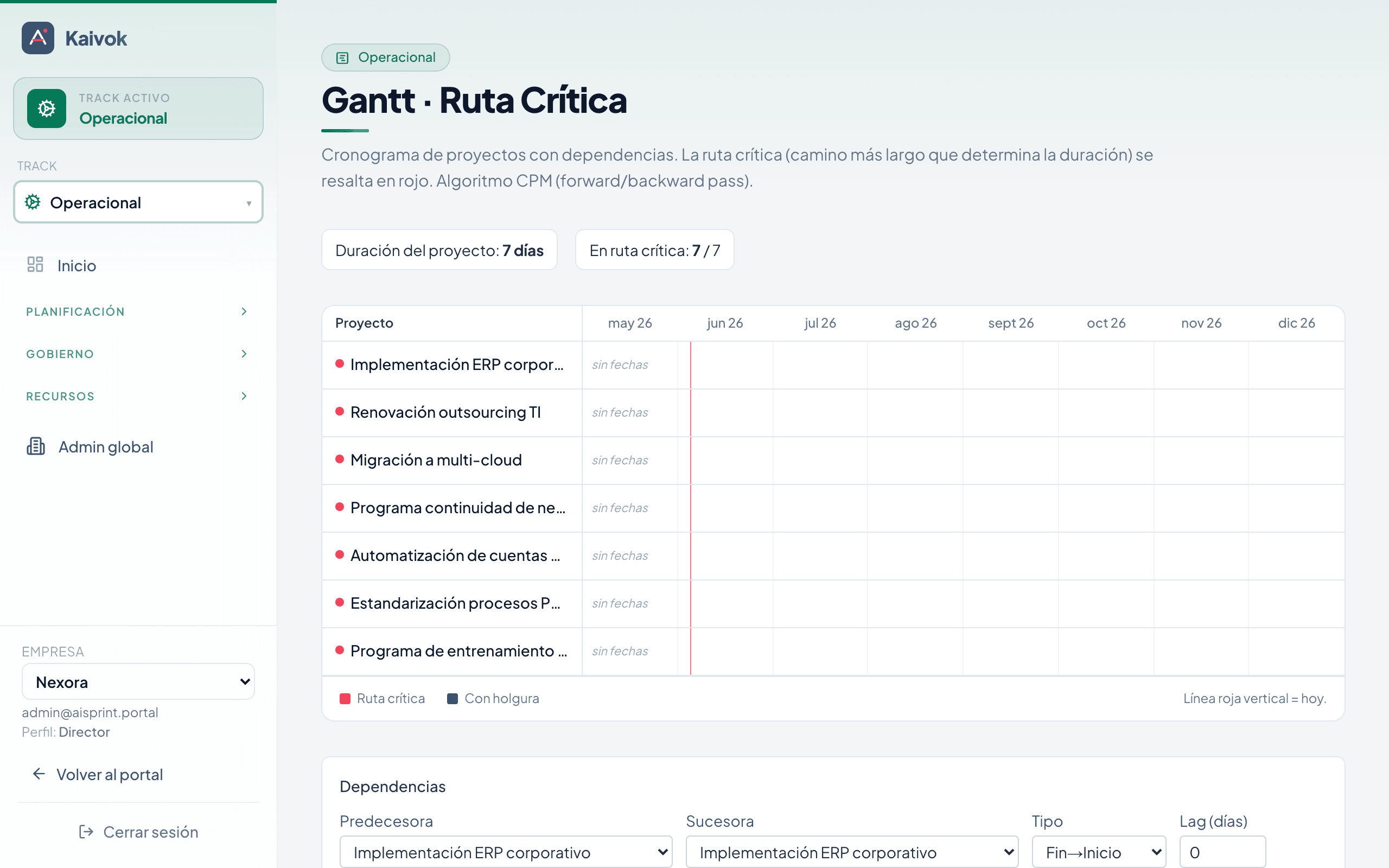
Real CPM, not a decorative Gantt.
The critical path method calculates which tasks can't slip without moving the delivery date. Float, dependencies and the chain that truly drives the timeline — visible, not glossed over.
Zero-float tasks, highlighted. If one slips, the project slips.
Predecessors, successors and slack for each task. Replan with visible consequences.
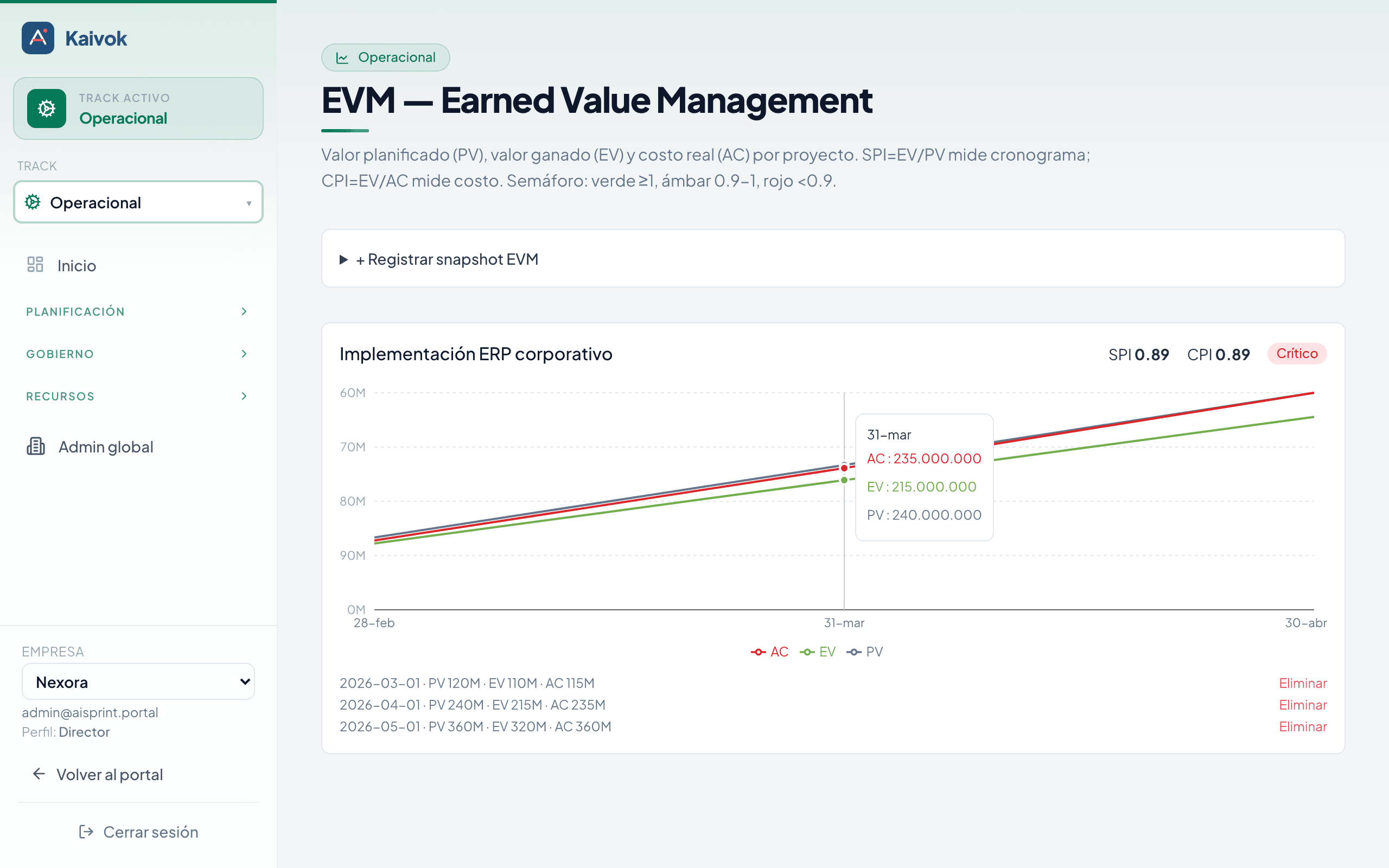
Earned value: the differentiator vs. Monday or Asana.
Earned Value Management answers what no task tool answers: are you on time and on budget, at once? SPI and CPI with status lights, project by project.
On schedule? SPI < 1 = behind.
On budget? CPI < 1 = over cost.
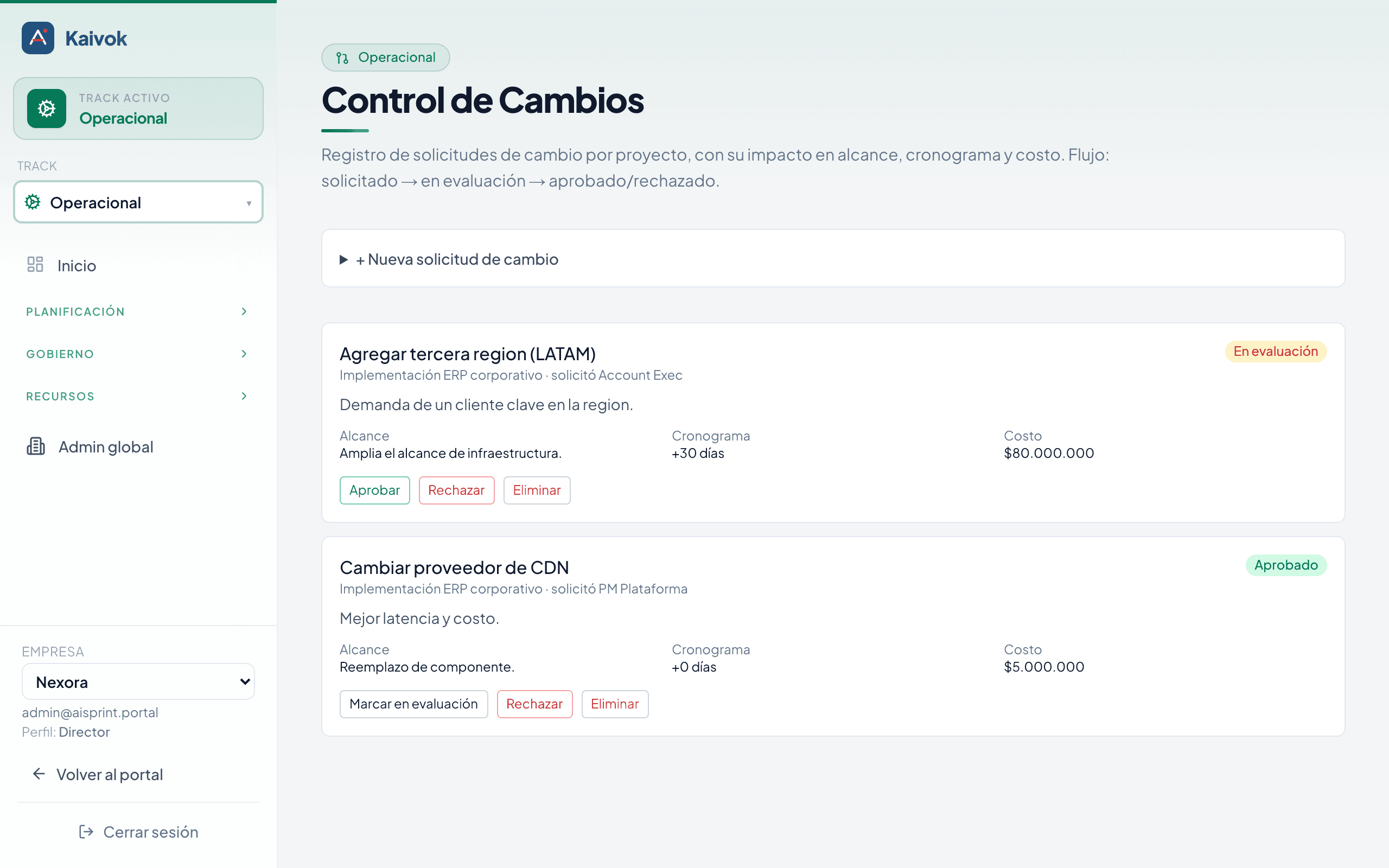
A formal Change Request workflow. Scope doesn't move on its own.
Every change to scope, schedule or cost goes through a formal flow: request, impact, approval and record. No more silent scope creep that derails projects.
Take your PMO from tasks to real project control.
We show you the same project in your current tool and in the cockpit. The difference speaks for itself.